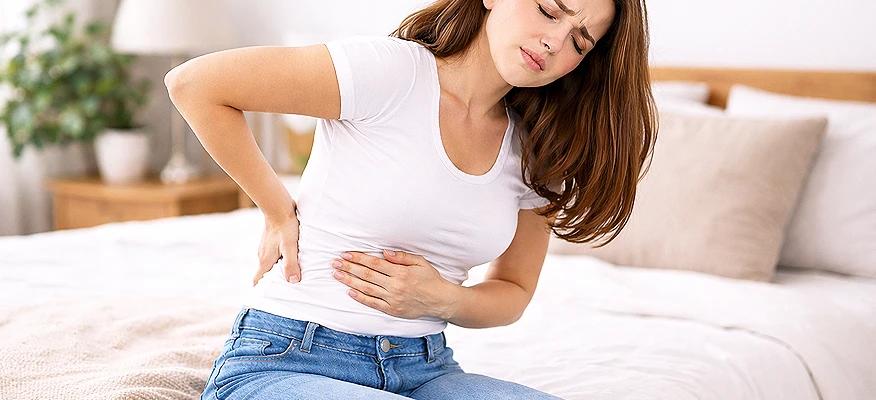
Bloating and back pain can sometimes happen together due to trapped gas, constipation, digestive problems, hormonal changes, or muscle strain. In many cases, the discomfort improves on its own, but persistent or severe symptoms may sometimes point to an underlying medical condition that needs attention.
Many people experience bloating and back pain together at some point. A bloated stomach with lower back pain can happen after eating, during periods, with constipation, trapped gas, or digestive conditions like IBS. Some people notice mild discomfort, while others experience sharp gas pain that spreads into the lower back or sides.
In most cases, bloating and back pain are temporary and improve once digestion settles. However, persistent bloating, severe stomach swelling, or ongoing back pain may sometimes point to an underlying digestive, urinary, or reproductive health condition.
This guide explains the common causes of stomach bloating and back pain, symptoms to watch for, when to seek medical attention, and the best ways to find relief naturally.
Can bloating cause back pain?
Yes, it can. If your stomach feels tight, heavy, or swollen and your lower back starts aching at the same time, the two are often connected.
When bloating builds up — whether from gas, fluid retention, or slow digestion — it creates pressure inside your abdomen. That pressure doesn’t just stay in your stomach. It can push outward and affect nearby muscles, including those that support your spine, leading to a dull ache or stiffness in your lower or middle back.
One simple way to think about it: a bloated stomach changes how your body holds itself. You might unconsciously sit differently, arch your back, or slouch to get comfortable. Over time, these small shifts can strain your back muscles and make discomfort more noticeable.
There’s also a nerve connection at play. Your gut and your lower back share some of the same nerve pathways, which means discomfort in your digestive system can sometimes be “felt” as back pain. This is known as referred pain, and it’s more common than most people realise.
On top of that, when you feel bloated, your body tends to tense up, especially around your abdomen and lower back. This added muscle tension can further contribute to that tight, achy feeling.
The good news is that this kind of back pain is usually temporary. As the bloating settles, whether through passing gas, improving digestion, or reducing fluid retention, the back discomfort often eases as well.
However, if you notice that bloating and back pain happen frequently, last for several days, or feel severe, it’s important to check in with a healthcare professional to rule out any underlying issues.
Takeaway:Bloating can trigger back pain by increasing abdominal pressure, affecting posture, and sharing nerve pathways with the spine—but it usually improves once the bloating settles.
Can gas cause back pain?
Yes. Trapped gas in the digestive system can sometimes cause pain that spreads to the lower, middle, or even upper back.
When gas builds up in the intestines, it creates pressure inside the abdomen. This pressure can irritate nearby nerves and muscles, leading to discomfort that radiates toward the back. Many people describe the sensation as:
- a dull ache in the lower back
- sharp pain that comes and goes
- tightness around the waist or ribs
- soreness that improves after passing gas
Gas-related back pain is often temporary and may become worse after eating large meals, carbonated drinks, or foods that trigger bloating.
Common causes of trapped gas include:
- constipation
- eating too quickly
- swallowing excess air
- food intolerances
- irritable bowel syndrome (IBS)
- high-gas foods like beans, onions, and broccoli
Walking, gentle stretching, staying hydrated, and passing gas often help relieve the discomfort.
However, severe back pain together with persistent bloating, vomiting, fever, or unexplained weight loss should never be ignored, as these symptoms may point to a more serious digestive condition.
Common causes of bloating and back pain
Bloating and lower back pain often happen together because the digestive system, abdominal muscles, and lower spine are closely connected. When pressure builds inside the stomach or intestines, it can affect nearby muscles, posture, and nerves, leading to discomfort in the back.
In many cases, the symptoms are temporary and improve once digestion settles. However, repeated bloating with back pain may sometimes point to an underlying digestive, hormonal, urinary, or musculoskeletal issue.
1. Trapped gas
One of the most common causes of bloating and back pain is trapped gas. When gas builds up inside the intestines, it creates pressure in the abdomen that can spread toward the lower or middle back.
Many people describe gas-related back pain as:
- a dull ache
- sharp cramping pain
- pressure in the lower back
- discomfort that improves after passing gas
Gas can build up after eating too quickly, swallowing excess air, drinking carbonated beverages, or eating foods that are difficult to digest.
Common gas-triggering foods include:
2. Constipation
Constipation can cause both stomach bloating and lower back pain. When stool stays in the intestines for too long, it increases pressure inside the abdomen and may strain nearby muscles and nerves.
People with constipation may also experience:
- hard or dry stools
- abdominal fullness
- stomach cramps
- excessive gas
- discomfort when sitting
Lower back pain caused by constipation is usually dull and improves once bowel movements become regular again.
3. Irritable bowel syndrome (IBS)
Irritable bowel syndrome, commonly known as IBS, is a digestive condition that frequently causes bloating together with lower back discomfort.
IBS can affect how quickly food moves through the intestines and may increase gut sensitivity, leading to:
- bloating
- abdominal pain
- constipation
- diarrhea
- excessive gas
- lower back aching
Stress, certain foods, hormonal changes, and lack of sleep may trigger IBS flare-ups in some people.
4. Food intolerances and digestive sensitivity
Some people develop bloating and back pain after eating foods their digestive system struggles to process properly.
Common triggers include:
- lactose intolerance
- gluten sensitivity
- artificial sweeteners
- high-fat foods
- spicy foods
When food is poorly digested, excess gas forms in the intestines, creating pressure and abdominal discomfort that may radiate toward the back.
People often notice symptoms shortly after meals, especially after overeating or eating too quickly.
5. Poor posture and prolonged sitting
Bloating can affect the way your body holds itself. A swollen or tight abdomen may cause you to slouch, arch your lower back, or sit differently to feel more comfortable.
Over time, this change in posture can strain the muscles supporting the spine and lead to lower back pain.
Long periods of sitting, weak core muscles, and lack of movement can make both bloating and back discomfort feel worse.
6. Stress and anxiety
Stress does not only affect the mind. It can also affect digestion and muscle tension throughout the body.
During periods of stress, digestion may slow down, causing:
- trapped gas
- bloating
- stomach discomfort
- constipation
At the same time, stress may tighten muscles in the lower back and increase sensitivity to pain, making discomfort feel more intense.
This is why many people notice worsening bloating and back pain during emotionally stressful periods.
7. Menstrual changes and hormonal fluctuations
Many women experience bloating and lower back pain around their menstrual cycle. Hormonal changes before and during periods can slow digestion, increase water retention, and trigger uterine contractions.
This may lead to:
- abdominal bloating
- pelvic pressure
- lower back pain
- cramping
- fatigue
Conditions such as PMS, endometriosis, fibroids, and ovarian cysts may also contribute to persistent bloating and lower back discomfort in some women.
8. Pregnancy
Pregnancy commonly causes bloating and back pain due to hormonal changes and the growing pressure of the uterus on the digestive system and spine.
During pregnancy, digestion naturally slows down, increasing the likelihood of:
- constipation
- trapped gas
- abdominal fullness
- lower back pressure
As pregnancy progresses, the additional body weight and shifting posture can also place more strain on the lower back muscles.
9. Kidney stones and urinary tract problems
Sometimes, bloating and lower back pain may be linked to urinary tract issues such as kidney stones or infections.
Kidney stones can cause:
- severe pain in the lower back or side
- nausea
- bloating
- painful urination
- blood in urine
Urinary tract infections (UTI) may also create pelvic pressure and lower abdominal discomfort that spreads toward the back.
10. Serious digestive conditions
Although most cases are harmless, persistent bloating and severe back pain should not be ignored. In some situations, these symptoms may be linked to more serious conditions such as:
- bowel obstruction
- pancreatitis
- inflammatory bowel disease
- ovarian cancer
- appendicitis
Seek medical attention if bloating and back pain are severe, frequent, worsening, or associated with symptoms like fever, vomiting, unexplained weight loss, or blood in stool or urine.
Serious causes of bloating and back pain
Most cases of bloating and back pain are linked to temporary digestive issues such as gas, constipation, or food intolerance. However, persistent, severe, or worsening symptoms can sometimes point to an underlying medical condition that needs proper evaluation.
Understanding the possible warning signs can help you know when it may be time to seek medical attention.
1. Kidney stones
Kidney stones can sometimes cause severe pain that begins in the side or lower back and radiates toward the abdomen or groin. Some people may also experience bloating, nausea, vomiting, or difficulty urinating.
The pain is often sharp and intense rather than dull or pressure-like. Medical attention is important if symptoms become severe or are accompanied by fever or blood in the urine.
2. Pancreatitis
Pancreatitis refers to inflammation of the pancreas. This condition may cause upper abdominal pain, bloating, nausea, vomiting, and pain that spreads into the back.
In many cases, the discomfort becomes worse after eating and may feel deep, constant, and difficult to relieve. Persistent digestive symptoms with severe back pain should never be ignored.
3. Endometriosis
Endometriosis occurs when tissue similar to the lining of the uterus grows outside the uterus. This condition commonly causes bloating, pelvic pressure, painful periods, and lower back pain.
Many women notice symptoms becoming worse around menstruation. Some may also experience digestive discomfort, constipation, fatigue, or pain during bowel movements.
4. Ovarian cysts
Large ovarian cysts can create pressure in the lower abdomen and pelvis, sometimes leading to bloating and lower back pain. Some cysts cause no symptoms, while others may trigger pelvic discomfort, fullness, or sudden sharp pain if they rupture.
Women who experience persistent bloating together with pelvic or back pain should speak with a healthcare professional for proper evaluation.
5. Bowel obstruction
A bowel obstruction happens when part of the intestine becomes blocked, preventing food, fluid, or gas from passing normally through the digestive tract.
This condition may cause severe abdominal bloating, cramping, vomiting, constipation, and back discomfort. In many cases, the stomach becomes visibly swollen and painful to touch.
Because bowel obstruction can become dangerous quickly, urgent medical care is necessary.
6. Ovarian cancer
Persistent bloating that does not improve, especially when combined with lower back pain, pelvic pressure, fatigue, or changes in appetite, may occasionally be linked to ovarian cancer.
Although ovarian cancer is less common, symptoms are often subtle in the early stages and may resemble ordinary digestive discomfort. Symptoms that occur frequently or continue for several weeks should always be medically assessed.
Why do I get back pain and bloating after eating?
This can happen when large meals, gas-producing foods, overeating, or food intolerances increase pressure in the digestive tract. The extra abdominal pressure may affect posture and surrounding muscles, leading to discomfort in the lower or middle back.
Common triggers include:
- carbonated drinks
- fatty foods
- spicy meals
- dairy intolerance
- overeating
- constipation
Symptoms that may occur together
- When your bloating has developed to the extent of causing back pain, you may also notice cramping, excessive gas, or alternating constipation and diarrhea.
- Fatigue also often follows, partly because discomfort interferes with sleep and concentration. Some people describe a tight band sensation across the mid back that worsens as the day goes on.
- Over time, quality of life takes a hit. Work productivity drops, social plans feel harder, and anxiety around meals creeps in. Research following patients with functional digestive disorders shows that persistent abdominal pain predicts longer-lasting back problems, largely due to ongoing nervous system sensitization.
Why do women experience bloating and lower back pain together?
Women commonly experience bloating and lower back pain together due to hormonal fluctuations, reproductive health conditions, and digestive changes.
During the menstrual cycle, rising and falling hormone levels can slow digestion, increase water retention, and trigger uterine contractions. This may lead to:
- abdominal bloating
- pelvic pressure
- lower back pain
- cramping
Conditions such as:
- PMS
- endometriosis
- ovarian cysts
- fibroids
- pregnancy
may also contribute to both symptoms at the same time.
In some women, digestive symptoms become more noticeable around menstruation because hormonal changes can affect gut sensitivity and bowel movements.
If bloating and back pain become severe, occur outside menstrual periods, or are associated with symptoms like unusual bleeding, fatigue, or unexplained weight loss, medical evaluation is important.
When should you see a doctor for bloating and back pain?
Seek medical attention if you experience:
- severe or sudden back pain
- persistent bloating lasting more than a few days
- fever or chills
- vomiting
- blood in stool or urine
- unexplained weight loss
- difficulty passing stool or gas
- chest pain
- painful urination
- bloating that keeps returning
- symptoms during pregnancy
These symptoms may indicate a more serious digestive, urinary, or reproductive condition that requires medical evaluation.
How to relieve bloating and back pain?
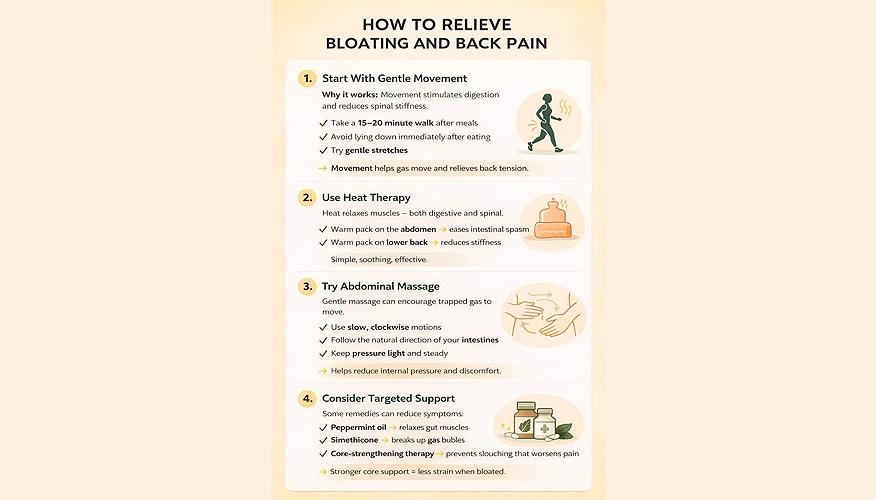
In many cases, bloating and back pain improve once trapped gas moves through the digestive system and pressure on the abdomen reduces. Simple lifestyle changes, better digestion habits, and gentle movement can often help relieve the discomfort naturally.
1. Move gently
Light movement such as walking or stretching may help improve digestion, release trapped gas, and reduce lower back stiffness. Sitting for long periods or lying down immediately after eating can worsen both bloating and back pain.
2. Apply heat
A heating pad or warm bath may help relax abdominal and back muscles, easing cramping, digestive discomfort, and muscle tension caused by bloating.
3. Try abdominal massage
Gentle abdominal massage may help trapped gas move through the intestines more easily. Massaging the stomach in a clockwise direction may also help reduce pressure and discomfort.
4. Stay hydrated
Drinking enough water supports healthy digestion and may help prevent constipation, which is a common cause of bloating and lower back discomfort.
5. Avoid gas-triggering foods
Foods such as carbonated drinks, fried foods, onions, beans, and processed foods may increase bloating in some people. Eating slowly and avoiding overeating may also help reduce swallowed air and gas buildup.
6. Improve posture
Bloating may cause people to slouch or sit differently, placing extra strain on the lower back. Sitting upright and stretching regularly can reduce pressure on the spine and abdominal muscles.
7. Consider digestive support
Some people may find relief from peppermint tea, probiotics, or anti-gas products such as simethicone, which may help break up trapped gas bubbles and reduce bloating discomfort.
8. Manage stress
Stress can affect digestion and increase muscle tension, making bloating and back pain feel worse. Relaxation techniques such as deep breathing, yoga, or meditation may help reduce symptoms.
Best foods and drinks to reduce bloating and back pain
Certain foods and drinks may help reduce trapped gas, support digestion, and ease the abdominal pressure that can contribute to back discomfort.
1. Bananas
Bananas are rich in potassium, which may help reduce water retention and bloating. They are also gentle on the digestive system.
2. Yogurt and kefir
Yogurt and kefir contain probiotics that support healthy gut bacteria and may help reduce gas, bloating, and digestive discomfort.
3. Ginger tea
Ginger may help stimulate digestion and reduce bloating caused by trapped gas or slow digestion. Warm ginger tea can also have a soothing effect on the stomach.
4. Peppermint tea
Peppermint tea may help relax digestive muscles and ease gas buildup, cramping, and abdominal discomfort.
5. Kiwi
Kiwi contains fiber that may support healthy bowel movements and help relieve bloating linked to constipation.
6. Water
Drinking enough water helps digestion work properly and may reduce bloating caused by constipation or excess sodium intake.
To know more about good foods for the gut, download our flipbook: Good Foods For A Good Gut
Conclusion
When your stomach bloats, and your back pains, your body is clearly asking for the deserved attention. Once you start listening closely, you often notice patterns in how you eat, move, and rest that gently explain what you feel.
As you support your gut, your back usually follows. With small, steady shifts, you give yourself relief that feels earned. You deserve comfort in your own body, every single day, without constantly pushing through discomfort.
Meet our expert

Meet our expert
Dr Adwoa Agyei-Nkansah is a fellow of the West African College of Physicians, a fellow of the Royal College of Physicians, London and a member of the American College of physicians.



How was the experience with article?
We'd love to know!