Bloating is among those common conditions that are extremely common, but no one wants to discuss it until it is already ruining their day and mood. A large Rome Foundation global study found that about 18 percent of people experience bloating at least once a week, while earlier surveys suggest the number is probably in the 25-30 percent range among otherwise healthy adults.
While bloating and gas are mostly harmless, they are deeply uncomfortable and stubbornly distracting. This, however, can also be addressed through light to moderate exercise for bloated stomachs, which can help gas move through the gut, reduce post-meal fullness, and sometimes even rival medications.
This article translates research and real experience into practical relief.
What causes a bloated stomach?
What causes a bloated stomach is the food you eat, how you eat, and how your gut decides to react to it. It is a subjective feeling, different for each of us, of pressure or fullness. Distension is the objective expansion you can measure, usually with regret.
The most common culprit behind your bloated stomach. Your gut bacteria ferment carbohydrates, particularly FODMAPs, and produce gas as a byproduct. Other than that, our enthusiastic swallowing of air through eating too fast, talking mid-bite, or chewing gum also contributes to an extent.
However, gas is not the lone antagonist, as bloated individuals rarely produce any more gas than healthy individuals. But slow intestinal transit and constipation trap that gas behind stool has a more profound effect, which is why improving bowel frequency reliably reduces bloating.
Large or fatty meals further slow bowel movement, increasing intraluminal pressure. Your food intolerance, including lactose, fructose, wheat, and gluten in celiac disease, can all provoke symptoms. If you have irritable bowel syndrome (IBS), a normal amount of gas may feel disproportionately painful.
Moreover, hormonal fluid shifts, inactivity, and prolonged sitting worsen motility. While uncommon, persistent or progressive distension can signal ascites, obstruction, or malignancy and deserves prompt evaluation.
How can you prevent bloating?
Bloating prevention is an unglamorous coalition of eating habits, food choices, movement, and stress management.
Start with how you eat. Smaller meals reduce gastric distension and intraluminal pressure. Chew thoroughly, put utensils down between bites, and avoid eating on the run to reduce swallowed air.
Next, look at what you eat. For most patients, trigger foods include fermentable carbohydrates, carbonated drinks, and high-fat meals. In IBS specifically, low FODMAP or individualized elimination diets show meaningful reductions in bloating in controlled trials.
Finally, exercise. Regular walking or light aerobic exercise improves gut motility and gas clearance. We’ll discuss them in more detail in the following sections.
How exercise helps relieve bloating
Exercise delivers among the most practical ways to resolve bloating, and none of them require turning your life into a CrossFit montage.
Frequent exercise enhances gut motility, which helps to move things along. Light walking after meals has been shown to reduce belching, gas, fullness, and discomfort.
In one randomized study, a few rounds around the block as a post-meal activity worked about as well as a standard prokinetic medication for bloating. If you can’t, simply being upright and keeping moving allows for better intestinal gas transit compared with lying down.
Abdominal wall and diaphragmatic motion during walking encourages gas to shift and evacuate, reducing gas trapping and distension.
Best exercises for a bloated stomach
A slightly humbling truth is that you’re better off doing mild exercises than doing aggressive training when your gut health is exclusively considered.
- First, walking. While the internet may call this “fart walks,” The data are annoyingly solid. Ten to twenty minutes of walking after meals improves bloating, gas, and fullness about as well as a prokinetic drug.
- Next comes gentle cardio like cycling or an elliptical. This nudges gut motility without you needing to jeopardize your knee health. However, sprinting after a large meal is less helpful and more regret-inducing.
Yoga and stretching help when kept mercifully gentle. Clinical trials suggest full yoga programs that focus on Apanasana, Ananda Balasana, Marjaryasana–Bitilasanan, etc., improve gut motility and quality of life, partly because slow movement plus breathing calms the nervous system.
Infographic showing 5 yoga poses to relieve gas and bloating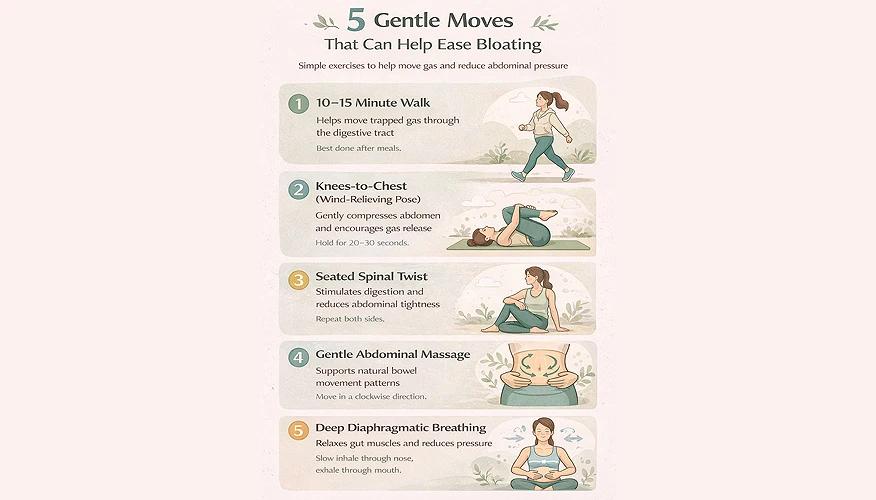
Best time to exercise for bloating relief
Muscle work and digestion usually compete for blood flow to get enough oxygen, so when exercise for bloating is considered, walking and other light activities are best done between 5 and 15 minutes after taking your meals.
Moderate and vigorous exercises like running and HIIT should wait for 1-2 hours after a light meal and 2-3 hours after a large meal to reduce nausea and cramping.
How long should you exercise to reduce bloating?
Studies suggest 10–15 minutes of light walking can meaningfully reduce post‑meal gas and fullness. A 5‑minute combination of gentle cardio plus a few yoga poses for a bloated stomach has also been recommended in clinical settings.
Exercises to avoid when bloated
Here are the exercises that should be avoided when you’re already bloated:
- Sprinting and HIIT right after meals jolt the gut aggressively. Avoid them if possible.
- Heavy lifts done with holding your breath raise intra-abdominal pressure and can worsen bloating.
- Intense core exercises involving crunches, long planks, and leg raises repeatedly squeeze the abdomen and might cause discomfort.
- Deep forward bends or inversions after meals should be avoided.
Lifestyle tips to prevent a bloated stomach
In addition to exercise, here are a few lifestyle tips proven to help with a bloated stomach:
- Avoid sitting for long, unbroken stretches. Stand up or walk whenever you can.
- After larger meals, stay upright rather than reclining for about twenty to thirty minutes.
- Go relieve yourself when you feel the urge instead of postponing it. Use a small footstool to raise your knees above hip level.
- Brief daily relaxation practices, such as breathing or gentle yoga, can meaningfully reduce bloating symptoms.
- Both smoking and alcohol use can impair gut motility and increase reflux.
When to be concerned about bloating
Most bloating is boring, harmless, and caused by your gut doing loud but nonlethal nonsense. However, some bloating is the gastrointestinal equivalent of having been physically threatened.
For instance, you should be concerned if you have persistent or worsening bloating; it means you are distended most days despite sensible measures. Plus, unintentional weight loss, blood in the stool, anemia, night sweats, recurring vomiting, and other critical symptoms paired with bloating can be cause for concern.
Furthermore, pencil-thin stool, new constipation, or diarrhea lasting more than a few weeks is not something to power through. A hard or asymmetric lump, or a fast-expanding belly, can also signal fluid buildup, obstruction, or worse.
When to see a doctor
See a clinician if bloating lasts longer than two to four weeks, keeps returning, or meaningfully ruins your quality of life. Go sooner if any red flags apply. Also consider evaluation if you suspect a specific cause, such as celiac disease, IBS, SIBO, inflammatory bowel disease, gallbladder problems, or gynecologic issues.
Doctors can investigate efficiently and selectively, then build a plan that actually fits your body instead of just telling you to drink more water and hope for the best.
Conclusion
Bloating can make you feel uncomfortable and distracted. However, you can manage the symptoms with gentle movement, mindful eating, and patience. You can often help your gut settle and feel like yourself again.
If your symptoms linger or worry you, consider the symptoms mentioned and consult your physician. You know your body best, and when you listen to it and seek care when needed, you give yourself the best chance at lasting relief and reassurance.
Meet our expert

GHBY Team
GHBY TeamMeet our expert
GHBY Team comprises content writers and content editors who specialise in health and lifestyle writing. Always on the lookout for new trends in the health and lifestyle space, Team GHBY follows an audience-first approach. This ensures they bring the latest in the health space to your fingertips, so you can stay ahead in your wellness game.



How was the experience with article?
We'd love to know!