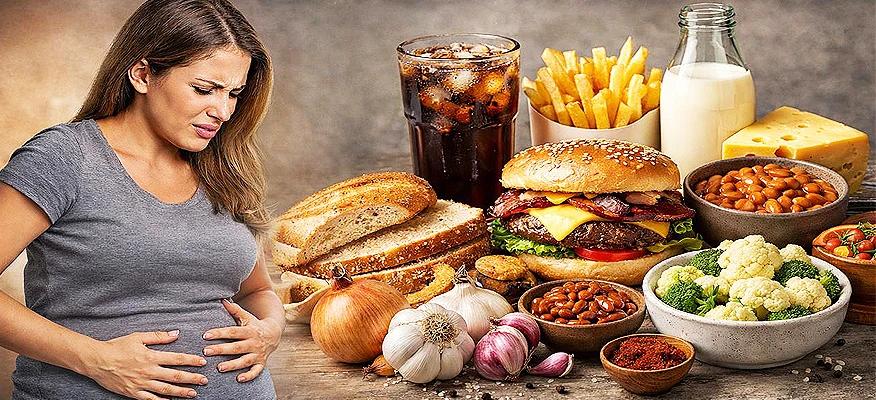
By the time you reach your late twenties or thirties, you’ve probably had at least one phase where your stomach felt constantly tight, swollen, or just uncomfortably full. It’s not rare.
In fact, up to 30% of adults report regular bloating, and in conditions like irritable bowel syndrome, that number climbs much higher.
What makes this more frustrating is that bloating doesn’t always match what you ate in volume. You can eat lightly and still feel distended. You can eat “healthy” and still feel uncomfortable.
Your body also responds not just to how much gas you have, but to how sensitive your gut is to that gas. That sensitivity varies widely, especially if you already have IBS.
So instead of guessing, you benefit from knowing about foods that cause bloating and why.
What is bloating?
When you say you feel bloated, you’re describing a sensation of pressure or fullness in your abdomen. Sometimes your belly visibly expands.
Other times, it feels tight without much visible change. Interestingly, imaging studies show that bloating does not always correlate with large increases in total gas volume. The average person produces between 200 and 500 milliliters of gas daily, and your body usually handles that quietly.
When you feel bloated, it’s not always because you have a huge amount of gas. Brain scans using MRI show that the problem is often small pockets of gas or extra water sitting in parts of your intestines. It’s more about where it is than how much there is.
Even when abdominal girth increases by less than two centimeters, your nervous system can amplify the sensation dramatically through brain-gut signaling pathways.
So when you feel swollen after lunch, your body is not exaggerating. It’s reacting to fermentation, fluid shifts, and heightened sensitivity.
Why do some foods cause bloating?
A group of carbohydrates known as FODMAPs, which stands for fermentable oligosaccharides, disaccharides, monosaccharides, and polyols, plays a central role. These carbs resist absorption in your small intestine.
Because they remain in the gut lumen, they draw water in through osmotic effects. Then, when they reach your colon, your gut bacteria ferment them quickly, producing hydrogen, methane, and carbon dioxide.
Randomized trials comparing wheat and rice show this clearly. After wheat consumption, breath hydrogen levels nearly double in some participants compared to rice.
Researchers tested this by comparing foods like wheat and rice. After people ate wheat, the amount of hydrogen in their breath almost doubled compared to after eating rice.
That means more fermentation happened with wheat. In lab measurements, gas production after wheat was nearly twice as high. More fermentation equals more gas. More gas equals more pressure.
Fiber adds another layer. Raffinose and resistant starch, found in many plant foods, also ferment vigorously. Meanwhile, high-fat meals slow gastric emptying.
When your stomach empties more slowly, the sense of fullness lingers, and your gut becomes more sensitive to stretching. In individuals with dysbiosis or altered microbiota, high-FODMAP diets even increase inflammatory markers like lipopolysaccharides, which can subtly affect gut permeability.
All of this means that your reaction is not random. It’s biochemical, mechanical, and neurological at the same time.
Common foods that cause bloating
Across meta-analyses and IBS-focused trials involving thousands of participants, the 15 worst foods for bloating consistently stand out.
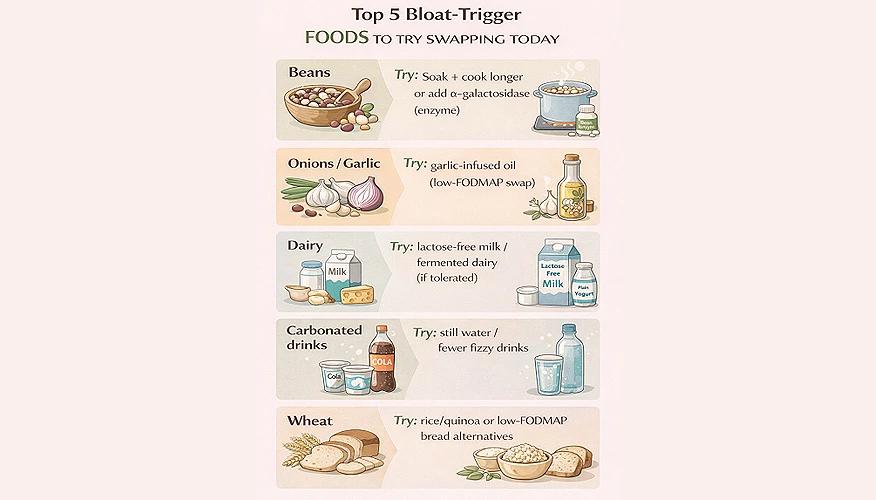
- Beans and lentils top the list. They contain galacto-oligosaccharides and fermentable fibers. In dietary trials, gas production nearly triples after legume-heavy meals. Some large dietary studies report a relative risk increase of bloating close to 1.8 when legumes are consumed frequently. When participants switch to low-FODMAP substitutes, symptom severity scores often drop between 20 and 50%.
- Wheat products like bread and pasta contain fructans. MRI studies show slower gastric emptying and higher colonic gas volumes after wheat compared to rice. Many participants report significantly higher bloating scores after wheat-based meals.
- Onions and garlic, both rich in fructans, frequently trigger breath hydrogen spikes. In elimination diets, removing them cuts bloating intensity by nearly half for many IBS patients.
- Dairy products, especially milk and soft cheeses, present another common trigger due to lactose. Globally, about two-thirds of adults have some degree of lactose malabsorption, and in certain Asian populations, that number rises above 80%.
- Apples, pears, and watermelon contain excess fructose or polyols. Around 30 to 40% of adults show measurable fructose malabsorption during breath testing.
- Cruciferous vegetables such as broccoli, cauliflower, cabbage, and Brussels sprouts contain raffinose and high fiber loads. For many of you, that fermentation translates directly into gas accumulation.
- Carbonated drinks introduce carbon dioxide directly into your digestive tract, which can worsen underlying fermentation effects. Beer combines carbonation with fructans from barley.
- Fatty and fried foods delay gastric emptying and heighten sensitivity. Sugar alcohols like sorbitol and xylitol, commonly found in gum and “sugar-free” products, draw water into your intestine and ferment rapidly.
- Even lettuce, especially in large quantities, can cause gas retention in susceptible individuals, as imaging studies have demonstrated in specific subsets.
Low-FODMAP diet trials involving over eight thousand participants show that 50 to 76% of patients experience meaningful symptom relief when these triggers are reduced.
How to reduce bloating caused by food
Given this evidence, the low-FODMAP diet has become a first-line strategy, especially for IBS.
Typically, it’s recommended to eliminate high-FODMAP foods for three to six weeks, then gradually reintroduce them. Around 70% of IBS patients report significant bloating reduction during the elimination phase.
You can also help yourself with practical habits. Eating smaller meals reduces acute distension. Chewing thoroughly improves digestion. A short walk after meals stimulates motility. In the DASH sodium reduction trial, lower sodium intake also reduced bloating risk, likely by limiting fluid retention.
Substitutions make a difference. You can choose rice instead of wheat, lactose-free dairy instead of regular milk, and the green parts of scallions instead of onions. Over time, gradual exposure often improves tolerance.
When to see a doctor
The most common cause of bloating is food, which is typically innocuous. However, if it lasts longer than three weeks, occurs frequently, or is accompanied by warning signals such as weight loss, blood in the stool, frequent vomiting, anemia, or a family history of colon cancer, you should consult a doctor.
Doctors can use blood tests, breath tests, or scans to detect celiac disease, inflammatory bowel disease, or an excess of bacteria in the small intestine. If everything appears normal, but the bloating persists, they may investigate how your gut moves or how your brain and gut interact.
Conclusion
Hopefully, you’ve understood which foods cause bloating and how you can effectively manage the symptoms. The good news is that bloating is only your body responding to specific triggers. When you understand those triggers, you gain clarity instead of blame.
Help your stomach gently with minor changes, keep patience, and seek help when needed. Other than that, be cautious of your eating and lifestyle habits, and try to incorporate a healthy diet.
Meet our expert

Meet our expert
Dr Sylvia Kama-Kieghe is a UK-based General Practitioner with a special interest in Women's Health and founder of Askawayhealth. She's also a tutor and medical student examiner. She is a Fellow of the Royal College of General Practitioners (FRCGP), Fellow of the Royal Society of Public Health (FRSPH), Fellow of the Royal Society of Medicine (FRSM), and holds a Diploma of the Faculty of Sexual and Reproductive Healthcare (DFSRH).



How was the experience with article?
We'd love to know!