
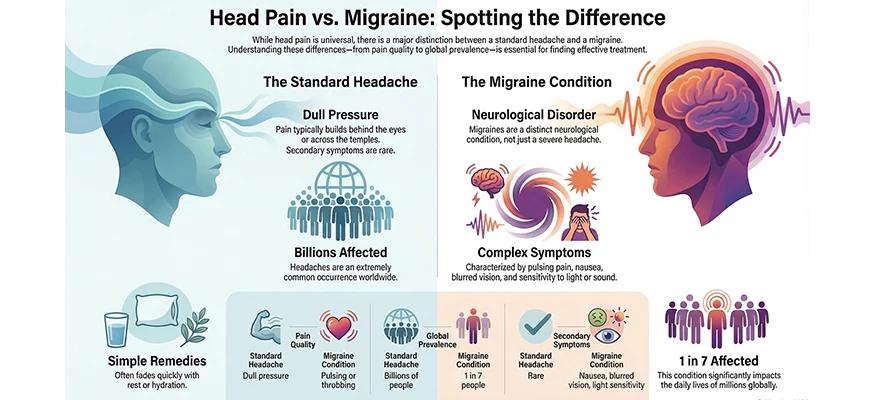
Head pain has a way of arriving uninvited, quietly derailing a perfectly normal day. One moment you’re going about your routine; the next, a dull pressure starts to build behind the eyes or across the temples.
For many people, it fades with rest or hydration. But for others, the pain deepens into something far more disruptive — pulsing or throbbing, often accompanied by nausea, blurred vision, or an intense sensitivity to light and sound that makes a dark, quiet room feel like the only refuge.
This is where the question of migraine vs. headache becomes important.
While general headaches are a near-universal human experience affecting billions, the migraine exists in a category of its own. Data indicates that migraines affect approximately 1 in 7 people across the globe. To put that into perspective for a digital age, that is nearly 15% of the global workforce, or likely several people within your immediate social circle, who are navigating a complex medical reality.
Despite this prevalence, the condition is frequently minimized. It is essential to recognize that a migraine is not simply a "bad headache"; it is a distinct neurological condition. The sheer scale of these statistics suggests a hidden crisis of under-diagnosis, where millions may be enduring chronic cycles of pain without the specific neurological framework required to manage them effectively.
What Is A Headache?
A headache is characterized by pain or discomfort in the head or upper neck region. Think of it as your body's way of signaling tension, stress, or fatigue through a dull, persistent ache that wraps around your head like a tight band.
Headaches fall into two main categories:
- Primary headaches: Where the headache itself is the main issue, accounting for more than 90% of all headaches
- Secondary headaches: Where head pain signals an underlying medical condition
The most common type you'll encounter is a tension headache. This headache type creates a constant, dull pain or pressure that many people describe as feeling like their "ead is in a vice." The pain typically affects both sides of your head and is accompanied by aching or tight muscles in your neck and shoulders.
Despite the discomfort, tension headaches are generally mild to moderate in intensity, allowing you to continue your daily activities, even if you're not feeling your best.
Cluster headaches represent another distinct type, occurring on a predictable schedule. These typically last about one hour and strike at the same time each day (often around 3 a.m.), causing excruciating pain that can wake you from sleep.
What Is A Migraine?
A migraine is fundamentally different from a regular headache; it's a neurological condition rather than simply severe head pain. While both involve head discomfort, migraines involve complex changes in brain activity that affect your entire nervous system.
What sets migraines apart are the multiple debilitating symptoms that often overshadow the head pain itself. These include sensitivity to light and sound, nausea, vomiting, concentration difficulties, and fatigue. The condition is so disabling that you often cannot work through the pain, unlike tension headaches, where daily activities can typically continue.
The Neurological Nature Of Migraine
Migraines occur when nerve pathways and brain chemicals are affected, leading to inflammation and changes in brain blood flow. This neurological mechanism explains why migraines extend beyond head pain and produce systemic symptoms throughout your body.
The condition progresses through distinct phases:
- Prodrome phase: Early warning signs occurring a day or two before, including mood changes, food cravings, neck stiffness, increased urination, and yawning
- Aura phase: Experienced by about one-third of sufferers, featuring visual disturbances like flashing lights, blind spots, or zigzag lines, along with tingling sensations
- Attack phase: The main migraine with severe throbbing pain, extreme light and sound sensitivity, nausea, vomiting, and blurred vision
- Postdrome phase: After-effects, including grogginess, mood changes, weakness, and continued sensory sensitivity
Key Differences Between Migraine And Headache
Understanding the difference between headache and migraine becomes clearer when you compare their distinct characteristics side by side:
| Feature | Headache | Migraine |
| Pain Type | Dull, aching, pressure-like | Throbbing, pulsating, intense |
| Pain Location | Both sides of the head | Usually one side of the head |
| Duration | 30 minutes to several hours | 4 hours to 3 days |
| Intensity | Mild to moderate | Moderate to severe |
| Associated Symptoms | Usually none | Nausea, vomiting, light/sound sensitivity |
| Impact on Activities | Can usually continue daily tasks | Often disabling; requires rest |
| Warning Signs | None | May have aura (visual disturbances) |
Migraine vs. Headache Symptoms
Recognizing the specific symptoms of each condition helps you understand what you're experiencing and seek appropriate care.
1. Headache Symptoms
Headache symptoms are straightforward and localized to the head. You'll typically experience:
- Constant, dull aching on both sides of your head
- Tightness or pressure across your forehead or the back of your head
- Tenderness in your scalp, neck, and shoulder muscles
- Mild to moderate pain that doesn't worsen with physical activity
- Rarely causes nausea or vomiting
Most importantly, while headache pain is uncomfortable, it doesn't prevent you from completing your daily activities.
2. Migraine Symptoms
Migraine symptoms are complex and multifaceted, affecting your entire system. During the attack phase, you'll experience:
- Severe throbbing pain (usually concentrated on one side of your head)
- Extreme sensitivity to light and sound
- Nausea and vomiting
- Blurred vision
- Lightheadedness or fainting
Notably, headache is just one symptom among many. Some people with chronic migraines experience migraine-related symptoms even on days without significant head pain. Other surprising migraine symptoms include body chills, phantom smells, and mood changes.
The severity and associated symptoms often make concentration and routine activities impossible, forcing you to rest or withdraw from your environment.
Common Triggers Of Migraine And Headache
Understanding what triggers your episodes can help you prevent them and manage your condition more effectively.
Lifestyle Triggers
While tension headaches are generally associated with stress and muscle tension in your neck and shoulders, migraines have more specific triggers. Migraine pain can be triggered by physical activity, irregular sleep patterns, skipped meals, dehydration, and hormonal changes, particularly relevant for women experiencing menstrual cycles, pregnancy, or menopause.
Environmental Triggers
Environmental factors play a more pronounced role in the onset of migraine. Migraines are sensitive to environmental stimuli, including:
- Bright light or flickering lights
- Loud noise or sudden sound changes
- Strong odors (perfumes, cleaning products, cooking smells)
- Weather changes or barometric pressure shifts
- Air quality changes
For women living in tropical or subtropical climates, factors like heat, humidity, and seasonal variations may serve as personal migraine triggers. Understanding your regional environmental factors helps you identify patterns and take preventive measures.
How To Tell If You Have A Migraine Or A Headache
Accurate self-assessment using specific symptom-based cues can help you differentiate between the two conditions and seek appropriate care.
- Pain quality and location: If you experience throbbing or pulsating pain on one side of your head, this strongly suggests a migraine. If the pain is dull and affects both sides of your head, it's likely a tension headache.
- Associated symptoms: Nausea, vomiting, or sensitivity to light and sound indicate a migraine. Tension headaches typically don't include these symptoms.
- Severity and functional impact: If the pain is moderate to severe and prevents you from working or continuing daily activities, a migraine is more likely. If you can continue your normal routine despite the discomfort, it's probably a tension headache.
- Duration: Migraines typically last 4 hours to 3 days, while tension headaches usually resolve within 30 minutes to several hours.
- Warning signs: Some people experience an aura, visual disturbances like flashing lights, blind spots, or zigzag lines, which occur in about one-third of migraine sufferers and are absent in tension headaches.
According to medical experts, a migraine diagnosis requires at least two of the following: one-sided location, throbbing quality, moderate-to-severe intensity, or worsening with routine activities, plus nausea, vomiting, or light/sound sensitivity.
When Head Pain Is A Warning Sign
While most headaches and migraines are manageable conditions, certain patterns require immediate medical attention to rule out serious underlying issues.
1. Red Flags Requiring Immediate Medical Attention
Use the mnemonic "first, worst, or cursed" as your guide:
- "First": If you experience a headache for the first time in your life and you're over 30 years old, seek medical attention immediately
- "Worst": If you experience the worst headache of your entire life, this may signal a serious condition, such as a brain hemorrhage, and requires emergency evaluation
- "Cursed": Headaches accompanied by other red flags, such as abnormal physical examination findings, neurological symptoms, or unexplained changes, require medical assessment
2. When To Seek Medical Advice
Beyond emergency situations, consult a healthcare provider if:
- You experience a significant change in your usual headache pattern or frequency
- Headaches become more severe or disabling over time
- New symptoms develop alongside head pain
- Over-the-counter medications no longer provide relief
- You suspect migraines, but haven't received a formal diagnosis
Early medical consultation is particularly important for women aged 25–45, as hormonal factors may influence migraine patterns, and accurate diagnosis enables access to preventive treatments and appropriate management strategies.
Migraine vs. Headache Treatment Approaches
The fundamental difference between these conditions extends to their treatment approaches, reflecting their distinct underlying mechanisms.
1. General Treatment Differences
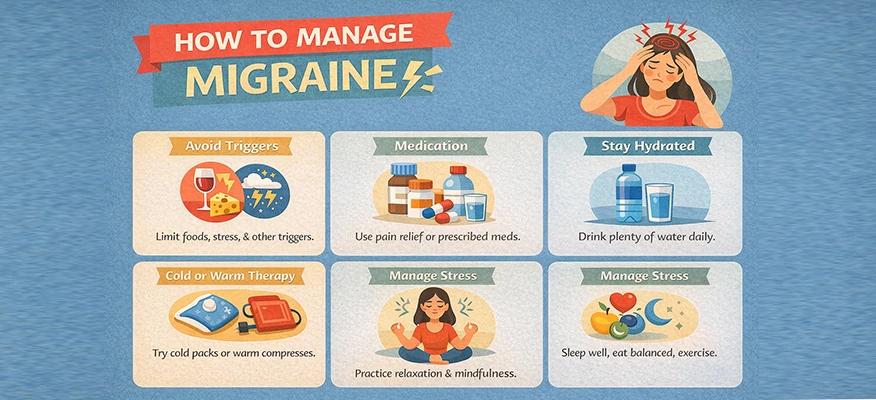
Tension headaches typically respond well to over-the-counter pain relievers such as aspirin or ibuprofen, and relief can often be achieved without medical intervention. Simple headache treatment at home includes rest, hydration, and stress management techniques.
In contrast, migraine treatment requires more targeted approaches. While over-the-counter pain relievers may provide some relief for mild migraines, moderate to severe migraines often necessitate prescription medications specifically designed for migraine management, such as triptans or other migraine-specific drugs.
2. Lifestyle And Management Focus
For tension headaches, management emphasizes stress reduction, muscle relaxation, and ergonomic adjustments to prevent future episodes. Headache treatment at home typically combines over-the-counter pain relief with lifestyle modifications.
Migraine treatment at home is more comprehensive and includes:
- Trigger identification and avoidance: Understanding personal migraine triggers (environmental, dietary, hormonal, or activity-related)
- Preventive strategies: Regular sleep, meal timing, hydration, and stress management
- Targeted exercises: Gentle neck stretches and relaxation techniques
- Environmental modifications: Managing light and sound exposure during attacks
- Rest protocols: Creating a quiet, dark environment for recovery
For women managing multiple responsibilities, culturally relevant lifestyle modifications, such as managing heat exposure, maintaining hydration in humid climates, and addressing stress related to work and family responsibilities, can complement medical treatment and significantly improve quality of life.
Conclusion
Understanding migraine vs. headache is key to getting the right treatment and avoiding unnecessary suffering. Migraines are a neurological condition, often marked by throbbing one-sided pain, nausea, and light sensitivity, and require different management than common headaches. Recognizing these differences helps prevent misdiagnosis, enables timely care, and supports strategies that reduce attack frequency and improve quality of life.
Meet our expert

Meet our expert
Dr. Irina Borisovna Stefanenko, a medical doctor based in Ukraine, graduated from Vinnitsa State Medical University in 1995. Between 1995 and 2000, Dr. Stefanenko pursued postgraduate studies and engaged in scientific activities at Vinnytsa Medical University in Ukraine.



How was the experience with article?
We'd love to know!