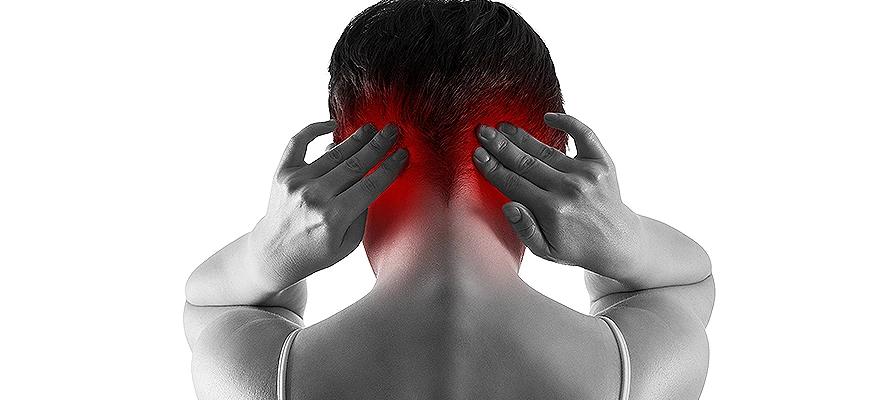
It often starts quietly—a dull pressure at the base of your skull, a tightening sensation that creeps up the back of your head after hours at your desk. At first it feels harmless. But as the day goes on, the discomfort grows harder to ignore.
Pain in the back of the head can be surprisingly common, yet its causes aren’t always obvious. From muscle tension and poor posture to nerve irritation or stress-related headaches, the source of the pain can vary widely. Understanding what might be triggering it is the first step toward finding lasting relief.
Where Exactly Is The Back Of The Head?
The back of your head is primarily formed by the occipital bone, a large, trapezoidal-shaped bone that makes up the posterior and lower portion of your skull. This bone sits at the very back of your cranium and covers what's called the occipital region, which is why pain in this area is sometimes referred to as occipital pain.
The occipital bone forms a crucial junction with your cervical spine through a specialized area called the craniocervical junction. Here, the occipital bone connects with the atlas and axis vertebrae, the first two bones of your neck. This connection is remarkably mobile and is responsible for most of your spine's rotation, extension, and flexion movements. No other part of your spine is more flexible than this region.
Within the occipital bone lies a large opening called the foramen magnum, through which your spinal cord passes as it exits your skull and connects to your brain stem. The scalp covering this bone contains multiple layers, including skin, connective tissue, and, importantly, the occipital artery and vein, along with sensory nerves called the greater and lesser occipital nerves. These nerves branch from your cervical spine and carry pain signals from this area.
The occipital region is densely packed with nerves, blood vessels, and muscles at the junction of the skull and neck, which can cause pain there to feel confusing or radiate in different directions. Pain originating at the base of your skull can spread upward across the back of your head, extend toward your temples, travel behind your eyes, or even radiate down into your neck and shoulders.
Common Causes Of Pain In The Back Of The Head
Understanding what's causing your discomfort is the first step toward finding relief. Here are the most frequent culprits behind pain in the back of the head:
- Neck muscle strain and poor posture: Long hours hunched over your laptop, constantly looking down at your phone, or bad sleeping posture place excessive tension on the neck muscles that attach to the occipital bone. This strain creates discomfort that radiates to the base of your skull.
- Tension headache: Muscle tightness in your neck and scalp creates a pressure-like sensation that commonly shows up as a dull ache at the back of your head. Stress, poor posture, or muscle fatigue also often trigger these headaches.
- Occipital neuralgia: This condition involves irritation or inflammation of the greater or lesser occipital nerves, causing sharp pain, burning sensations, or electric-like jolts at the base of your skull that may shoot upward along your scalp.
- Cervicogenic headache: When there's dysfunction in your cervical spine, whether in the neck joints, discs, or vertebrae, the pain can be referred to the back of your head. This type of headache often comes with neck stiffness.
- Stress-related muscle tightness: Emotional stress triggers involuntary muscle contraction in your neck and shoulders, which can compress nerves and blood vessels, resulting in pain at the base of your skull.
Symptoms That Often Occur With Pain At The Base Of The Skull
Pain in the back of your head rarely travels alone. The symptoms that commonly accompany this type of discomfort include:
- Neck stiffness: You might notice reduced flexibility and tightness in your neck muscles, making it difficult to turn your head or move freely.
- Reduced neck movement: Limited range of motion when rotating, flexing, or extending your neck due to muscle tension or joint dysfunction.
- Headache spreading to temples or behind eyes: The pain that starts at the base of your skull often radiates forward, creating discomfort in the front or sides of your head.
- Tenderness at the base of the skull: The area becomes sensitive to touch, and you might feel soreness when applying pressure to the occipital region.
Pain worsening with movement: The discomfort intensifies when you move your neck, turn your head, or change positions, suggesting muscle or nerve involvement.
Solution for pain in the back of head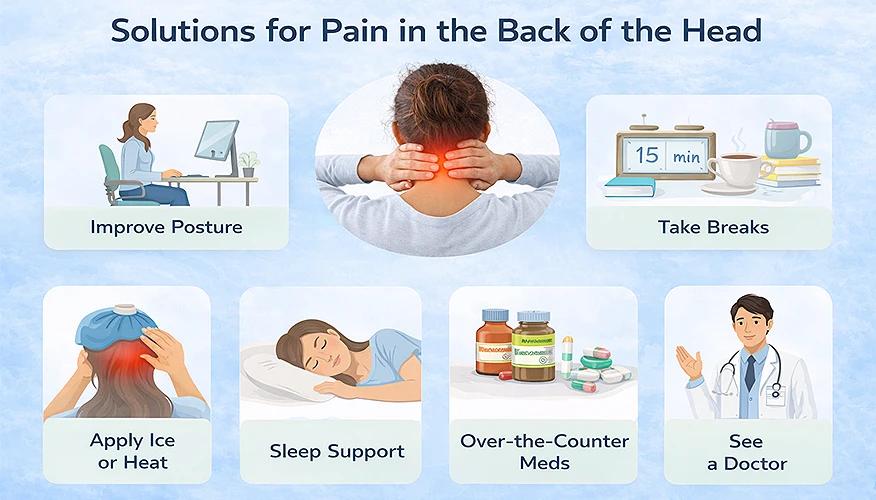
Connection Between Pain In The Back Of The Head And Neck
Your neck and the back of your head are intimately connected, which explains why neck problems so often cause head pain. Your neck muscles, particularly those that attach to the occipital bone at the base of your skull, form a continuous muscular system that supports your head and enables movement.
The greater occipital nerve, which originates from your cervical spine, travels upward through these neck muscles and supplies sensation to the posterior scalp and motor function to your neck muscles. When neck muscles become strained, tight, or fatigued, they can irritate these nerves and create pain that radiates into the occipital region.
Neck problems often cause head pain due to the shared nerve supply and muscular continuity. Issues within the cervical spine, such as joint dysfunction, disc problems, or muscle tightness, directly affect the structures that connect to your skull. The craniocervical junction is particularly vulnerable because this region bears the weight of your head and performs most of your spine's rotational movements. When this area experiences stress or dysfunction, pain signals travel along the greater and lesser occipital nerves, creating what feels like a headache at the back of your head rather than neck pain.
Your sleeping position and daily posture also play critical roles in whether you develop this type of pain. Forward head positioning from screen use, slouching while sitting, or hunching over a desk places abnormal stress on your cervical spine and supporting muscles. Similarly, sleeping with unsupportive pillows or with your neck twisted prevents proper muscle relaxation and recovery, leading to chronic tension that manifests as pain at the base of your skull.
When Pain In The Back Of The Head Is Serious
While most cases of pain in the back of the head are benign and manageable, certain warning signs require immediate medical attention.
- Sudden severe pain: Abrupt onset of intense pain at the back of your head, especially if it's unlike any headache you've experienced before, warrants immediate medical evaluation.
- Pain after injury or accident: Pain developing following head trauma, whiplash, or any accident involving your head or neck requires prompt assessment to rule out serious injury.
- Pain with fever, vision issues, or weakness: The combination of occipital pain with fever, blurred or double vision, numbness, weakness, or difficulty moving suggests a potentially serious underlying condition requiring urgent medical attention.
- Pain that keeps worsening or doesn't improve: Pain that progressively intensifies over time or persists despite self-care measures may indicate an underlying condition requiring professional diagnosis and treatment.
How Is Pain In The Back Of The Head Diagnosed
Healthcare providers use several approaches to identify the cause of your occipital pain. Diagnosis typically begins with understanding your symptoms and medical history. A physical examination and, in some cases, imaging tests may also be used to clarify the source of discomfort.
- Physical and neurological examination: Your healthcare provider will assess your symptoms and medical history, then perform tests to evaluate nerve function, reflexes, and sensation in your head and neck region.
- Checking posture and neck movement: The doctor will observe your posture, evaluate your range of neck motion, and identify areas of muscle tightness or restriction that may contribute to your pain.
- Imaging tests if required: If the initial examination suggests structural problems, X-rays, MRI scans, or CT imaging may be ordered to visualize your cervical spine, occipital bone, and surrounding soft tissues for signs of injury, degeneration, or nerve compression.
Ways To Relieve Pain In The Back Of The Head
Several strategies may help relieve pain in the back of the head. The appropriate approach depends on the underlying cause and the severity of your symptoms.
- Rest and posture correction: Give your neck muscles time to recover by reducing activities that aggravate your pain. Consciously improve your posture during daily activities, especially while using screens or working at a desk.
- Gentle neck stretches: Perform slow, controlled neck stretches to reduce tension and improve flexibility. Avoid aggressive movements that could worsen your pain.
- Heat or cold therapy: Apply warm compresses or heating pads to relax tight muscles, or use cold packs to reduce inflammation and numb sharp pain, depending on what provides relief for your specific symptoms.
- Stress management: Practice relaxation techniques such as deep breathing, meditation, progressive muscle relaxation, or yoga to reduce emotional stress that contributes to muscle tightness.
- Medical treatment if needed: Over-the-counter pain relievers, muscle relaxants, or prescription medications may be recommended by your doctor. In some cases, physical therapy, nerve blocks, or other interventions may be necessary for relief of tension headaches.
When To See A Doctor
Knowing when to seek professional help can prevent your condition from becoming chronic. Certain symptoms or changes in your pain pattern may indicate the need for medical evaluation.
- Pain lasting more than a few days: If your occipital pain persists for longer than 2-3 days despite self-care measures, schedule an appointment with your healthcare provider.
- Pain interfering with daily activities or sleep: Seek medical evaluation if your pain significantly impacts your ability to work, exercise, enjoy daily activities, or sleep restfully.
- Repeated episodes or worsening intensity: If you experience recurring bouts of pain in the lower parts of your head, or notice that your symptoms are becoming more severe or frequent, professional assessment is important to identify underlying causes.
Conclusion
Most cases of pain in the back of the head improve with self-care, lifestyle adjustments, and medical guidance when needed. Identifying the underlying cause helps guide the right treatment. Improving posture, managing stress, taking screen breaks, and supporting good sleep can reduce symptoms. If pain persists or worsens, seek medical advice to prevent chronic discomfort and protect your long-term well-being.
Meet our expert

Meet our expert
A Doctor of Medicine (MD) in Pharmacology., currently based in Mumbai, India, Dr Pramod Mane, comes with an experience of more than 20 years of working in Medical Affairs in the Pharmaceuticals & Nutraceutical Industry. Director of Medical Services at Mega Lifesciences since 2008, Dr Mane has been associated with several MNCs in the areas of Medical Affairs, Medical Services, Medico-marketing, Pharmacovigilance & Clinical trials in his illustrious career.



How was the experience with article?
We'd love to know!